


Garage door springs are among the most important mechanical components in a residential garage door system. They counterbalance the weight of the door and help it move up and down with the assistance of the opener. When a spring breaks, the door can become extremely heavy, unstable, and difficult to control. For homeowners dealing with Broken Garage Door Springs Magnolia, understanding the risks associated with spring failure is important before attempting to operate the door.
A broken spring is not simply an inconvenience. Attempting to open, close, remove, or repair a garage door with a failed spring can expose homeowners to serious injury risks. The spring itself stores substantial mechanical energy, and other components can also shift or fail when the spring is damaged.
Understanding why springs break, how to recognize the warning signs, and what to do when failure occurs can help homeowners avoid unnecessary damage and dangerous situations.
What Does a Garage Door Spring Do?
Most residential garage doors use either torsion springs or extension springs. Both types perform the same basic function: they help counterbalance the weight of the garage door.
A typical garage door can weigh hundreds of pounds. Without the spring system, the opener would have to lift the full weight of the door, placing excessive stress on the motor and other components.
Torsion Springs
Torsion springs are mounted horizontally above the garage door opening. As the door closes, the springs wind and store mechanical energy. When the door opens, that stored energy helps lift the door.
Torsion spring systems are common because they provide controlled movement and can offer consistent counterbalance when properly installed and maintained.
Extension Springs
Extension springs are typically installed along the horizontal tracks on either side of the garage door. They stretch and contract as the door moves, helping offset the weight of the door.
Because extension springs operate under tension, they also require proper safety hardware and professional handling when they fail.
Regardless of the spring type, a failed spring affects the balance and operation of the entire garage door system.
Why Do Garage Door Springs Break?
Garage door springs are designed for repeated cycles, but they are not permanent components. Every time the garage door opens or closes, the springs undergo mechanical stress.
Several factors can contribute to spring failure.
Normal Wear and Tear
Repeated cycling is one of the primary reasons garage door springs eventually fail. A spring may perform thousands of opening and closing cycles before its metal fatigues.
As the spring ages, its ability to handle repeated tension and compression gradually decreases. Eventually, it may crack or snap.
Rust and Corrosion
Moisture can contribute to corrosion on exposed metal components. Rust can weaken a spring’s surface and affect its ability to handle repeated mechanical stress.
Seattle’s damp conditions can make routine inspection particularly useful for identifying corrosion and other signs of deterioration.
Improper Spring Selection
A replacement spring must be appropriate for the garage door’s weight and configuration. Installing a spring that is too weak or too strong can affect the door’s balance and place unnecessary stress on other components.
Spring replacement should therefore involve more than simply finding a spring that physically fits the existing system.
Poor Installation
Incorrect installation can affect spring tension, door balance, cable positioning, and overall system operation. A spring that has not been installed or adjusted correctly can create additional mechanical problems.
Changes to the Door
Replacing a garage door, adding insulation, or changing certain hardware can alter the door’s overall weight. If the spring system is no longer properly matched to the door, the system may not operate as intended.
Warning Signs of a Failing Garage Door Spring
A spring does not always fail without warning. Homeowners may notice changes in the door’s operation before the spring breaks completely.
Common warning signs include:
- The garage door becomes unusually heavy
- The door opens more slowly than normal
- The door struggles to stay open
- The door closes too quickly
- The door appears uneven while opening
- A visible gap appears in a torsion spring
- Extension springs appear stretched or damaged
- Loud snapping or popping sounds occur
- Cables become loose or appear out of position
- The garage door opener struggles to lift the door
A noticeable change in how the door moves should not be ignored. A professional inspection can determine whether the spring, cables, rollers, tracks, opener, or another component is causing the problem.
What Happens When a Garage Door Spring Breaks?
When a spring breaks, the garage door loses much of the assistance that normally counterbalances its weight.
The door may suddenly become extremely difficult to lift manually. In some situations, it may remain closed. In others, it may become partially open and difficult to move safely.
The opener may also struggle to lift the door. Continuing to operate the opener when the spring is broken can place additional strain on the motor, gears, drive system, and other components.
A broken spring can also affect cables and other hardware. Depending on the garage door design and the nature of the failure, components may become loose or shift from their normal positions.
This is why a broken spring should be treated as a mechanical safety issue rather than a routine inconvenience.
Why Broken Garage Door Springs Are a Serious Safety Risk
The main safety concern is the combination of door weight and stored mechanical energy.
The Door Can Become Extremely Heavy
A garage door that normally feels manageable because of the spring system can become very difficult to lift after spring failure.
Trying to lift the door without understanding its condition can result in loss of control. The door may move unexpectedly, fall, or place excessive strain on a person’s back, shoulders, hands, or other parts of the body.
Springs Store Mechanical Energy
Garage door springs are designed to store and release energy during normal operation. When a spring is under tension, improper handling can result in sudden movement.
Cutting, loosening, adjusting, or removing spring hardware without the appropriate tools and training can be dangerous.
Cables Can Become Loose
Garage door cables work with the spring and drum system to help control door movement. A spring failure can affect cable tension and positioning.
A loose or damaged cable can create another hazard if someone attempts to manipulate the system without professional knowledge.
The Opener Can Be Overloaded
Garage door openers are designed to work with a properly balanced door. They are not intended to compensate for a failed spring by lifting the full weight of the door.
Operating an opener repeatedly with a broken spring can place additional strain on the opener’s mechanical and electrical components.
The Door Can Become Unstable
A broken spring can leave the door improperly balanced. Depending on the system, the door may become difficult to move evenly or may stop at an unusual position.
An unstable garage door can create risks for anyone walking underneath or attempting to move it manually.
Can You Open a Garage Door With a Broken Spring?
It may be physically possible to move some garage doors manually after a spring breaks, but that does not mean it is safe to do so.
The spring normally assists with much of the door’s weight. Without that assistance, the full weight may need to be controlled manually.
For this reason, homeowners should avoid forcing the door open or attempting to hold it in position. If the door is stuck closed, leave it in place and arrange for professional service.
If the garage door is already open when the spring breaks, avoid standing underneath it or attempting to close it without professional assistance.
Should You Repair a Broken Spring Yourself?
Garage door spring replacement is not an appropriate DIY repair for most homeowners.
The issue is not simply removing the old spring and installing a new one. The technician must consider the spring type, door weight, dimensions, hardware configuration, winding or stretching requirements, cable position, balance, and overall condition of the door.
Torsion springs in particular require specialized tools and procedures. An incorrect adjustment can cause the spring to release energy unexpectedly.
Professional service also allows the technician to inspect related components rather than replacing the spring without checking the rest of the system.
What Happens During Professional Spring Repair?
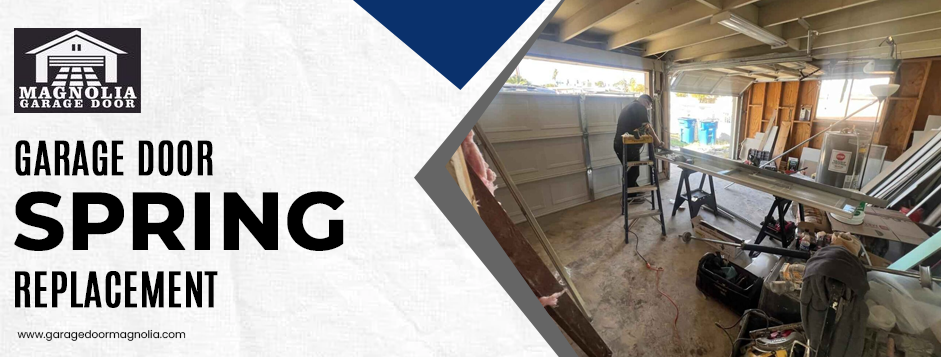
A professional spring repair generally begins with an inspection of the garage door system.
The technician may check:
- The type and condition of the existing spring
- The garage door’s weight and configuration
- Cables and cable drums
- Rollers and tracks
- Hinges and other hardware
- Door balance
- Garage door opener operation
- Safety components
If the spring needs replacement, the technician selects a suitable replacement based on the garage door system rather than using a one-size-fits-all component.
After installation, the system should be tested to verify that the door moves correctly and remains properly balanced.
How to Reduce the Risk of Spring Failure
Springs eventually wear out, but regular maintenance can help identify developing problems before they become more serious.
Schedule Routine Inspections
A professional inspection can identify corrosion, worn springs, damaged cables, deteriorating rollers, loose hardware, and other issues.
Pay Attention to Changes in Operation
Do not ignore unusual noises, uneven movement, increased door weight, or changes in opening speed. These can indicate developing mechanical problems.
Keep Moving Components Maintained
Proper maintenance can reduce unnecessary friction and wear on components such as rollers, hinges, and other moving hardware.
Do Not Overload the Door
Adding significant weight to a garage door can affect its balance and place additional demands on the spring system. Any major modification should be evaluated to determine whether the existing spring system remains suitable.
Avoid Improvised Repairs
Using incorrect springs, makeshift hardware, or temporary fixes can create additional risks. Garage door components work as a connected system, so one incorrect repair can affect several other parts.
When Should You Call a Garage Door Professional?
Professional service is appropriate when a garage door spring snaps, shows visible damage, becomes heavily corroded, or causes noticeable changes in door operation.
You should also seek service if:
- The garage door will not open
- The door is extremely heavy
- The door is uneven
- A cable has come loose
- The spring has separated or visibly broken
- The opener runs but the door does not move properly
- The door makes unusual popping or grinding sounds
- The garage door becomes stuck in an unsafe position
If the spring has already broken, avoid attempting to operate the system until it has been inspected.
Broken Garage Door Springs Magnolia: What Homeowners Should Know
Searching for broken garage door springs Magnolia usually means the problem needs attention quickly. A broken spring can prevent normal access to your garage and may affect the safe operation of the entire door system.
Homeowners should avoid focusing only on the broken spring itself. The failure can affect cables, drums, rollers, tracks, and the opener. A complete inspection helps determine whether additional components have been damaged or are showing signs of wear.
It is also important to avoid choosing a replacement spring based solely on appearance. Spring dimensions, type, door weight, and system configuration all matter when selecting the correct component.
How Regular Maintenance Can Help
Garage door maintenance is not limited to lubricating a few moving parts. A proper tune-up involves checking the condition and operation of the complete system.
Important inspection points include spring balance, cables, rollers, tracks, hardware, safety sensors, and the opener. Loose hardware can be tightened, moving components can be lubricated where appropriate, and developing problems can be identified before they result in a complete failure.
Maintenance cannot prevent every spring from eventually reaching the end of its service life. However, regular inspections can help homeowners understand the condition of the system and address worn components before they create larger problems.
Our Garage Door Spring Repair Service in Magnolia
At Magnolia Garage Door, we provide professional garage door spring repair and replacement for homeowners and businesses in Seattle, including the Magnolia area. Our full-time technicians handle torsion and extension spring replacements and inspect the surrounding garage door system as part of the repair. We focus on proper spring selection, door balance, safe operation, and the condition of related components such as cables, rollers, and tracks. When a spring breaks, our goal is to identify the cause of the problem, complete the necessary repair using quality replacement components, and verify that the garage door operates safely before the service is finished. We also provide emergency garage door repair for urgent situations when a failed spring or other problem leaves a property without a safely functioning garage door.
Conclusion
A broken garage door spring should never be treated as a minor mechanical problem. Springs play a critical role in counterbalancing the weight of the garage door, and failure can make the door heavy, unstable, and difficult to control.
The safest response is to stop operating the garage door and arrange for a professional inspection. Avoid pulling on damaged cables, adjusting spring hardware, or attempting to replace a spring without the proper training and equipment.
Regular maintenance can also help identify worn springs, damaged cables, loose hardware, and other problems before they lead to unexpected failure. When a garage door spring does break, professional repair can restore the balance and safe operation of the system while allowing other components to be checked for related damage.
Frequently Asked Questions
1. What causes a garage door spring to break?
Garage door springs typically break because of normal wear from repeated opening and closing cycles. Rust, corrosion, improper spring sizing, incorrect installation, and changes to the door’s weight can also contribute to spring failure.
2. Is it safe to open a garage door with a broken spring?
It is generally not safe to operate a garage door after its spring breaks. Without the spring providing counterbalance, the door can become extremely heavy and difficult to control. Operating the opener can also place additional strain on its components.
3. How do I know if my garage door spring is about to break?
Warning signs can include unusual popping or snapping sounds, a door that feels heavier than normal, uneven movement, difficulty staying open, visible gaps in a torsion spring, rust, or stretched and damaged extension springs.
4. Can I replace a broken garage door spring myself?
Garage door spring replacement is not recommended as a DIY repair. Springs can store significant mechanical energy, and incorrect removal, installation, or adjustment can cause serious injury or damage. A trained garage door technician should handle the repair.
5. How often should garage door springs be inspected?
Garage door springs should be checked as part of routine garage door maintenance, particularly when you notice changes in the door’s movement, unusual sounds, or visible wear. Regular professional inspections can help identify worn springs and related components before a failure occurs.