
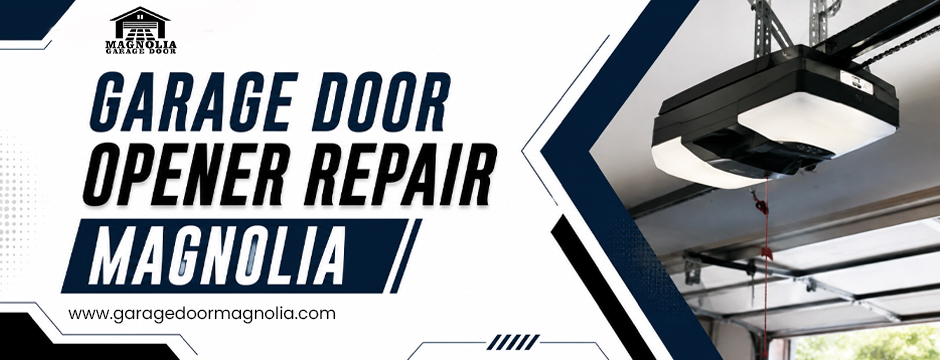
A garage door opener is responsible for more than simply opening and closing your garage door. It controls the motorized movement of the door, responds to wall controls and remotes, and works with safety sensors to help prevent accidents. When the opener develops a problem, the door may stop moving completely, reverse unexpectedly, operate slowly, or make unusual sounds.
For homeowners looking for Garage Door Opener Repair Magnolia, identifying the cause of the problem is the first step toward getting the system working properly again. Some opener problems are simple, such as a dead remote battery or a blocked sensor. Others can involve the motor, drive mechanism, wiring, limit settings, or other components that require professional attention.
Understanding the common causes of opener failure can make it easier to recognize what may be wrong and determine when professional service is necessary. Here are the issues that most often prevent a garage door opener from working correctly.
The Garage Door Opener Has No Power
One of the first things to check when an opener does not respond is its power supply. The opener motor cannot operate if the unit is not receiving electricity.
Check whether the opener is plugged into its outlet and whether the outlet is supplying power. A tripped circuit breaker or electrical issue can also prevent the opener from turning on.
If the wall control and remote both fail to operate the opener, while the unit shows no signs of power, the problem may be electrical rather than mechanical.
Do not attempt to open or modify electrical components inside the opener yourself. If the outlet and circuit are working but the opener remains inactive, a technician can determine whether the unit has an internal electrical fault.
The Remote Control Does Not Work
A garage door opener can appear to have failed when the actual problem is the remote control.
A weak or dead battery is a common cause. Replace the battery and test the remote again. If the remote still does not work, it may have lost its programming or developed an internal fault.
Distance can also matter. If the remote works only when you are very close to the opener, there may be an issue with the remote, receiver, antenna, or surrounding interference.
If the wall-mounted control operates the door but the remote does not, the opener itself may be functioning normally. The problem is more likely related to the remote or its communication with the opener.
The Wall Control Does Not Respond
If neither the wall control nor the remote operates the garage door, the problem may be within the opener system or its power supply.
If the wall control is the only control that has stopped working, check for obvious signs of damage or loose connections. Wiring problems can interrupt communication between the wall control and the opener.
Some openers may also have control-panel or logic-board issues that prevent commands from reaching the motor.
A technician can test the control circuit and determine whether the problem is with the wall control, wiring, or opener itself.
The Garage Door Opener Runs, but the Door Does Not Move
Another common situation occurs when you can hear the opener motor running, but the garage door remains stationary.
This can indicate a problem with the mechanism that transfers movement from the opener to the door. Depending on the opener design, components such as the drive gear, chain, belt, or trolley may be involved.
The condition of the garage door itself should also be considered. A door that is excessively heavy, damaged, or difficult to move manually can place additional strain on the opener.
An opener is designed to move a properly functioning door. It should not be expected to compensate for serious problems with springs, cables, tracks, rollers, or other door hardware.
If the motor runs but the door does not move, avoid repeatedly activating the opener. Continued operation can place unnecessary stress on the system.
The Garage Door Opens but Will Not Close
A garage door that opens normally but refuses to close often has a problem with its safety system.
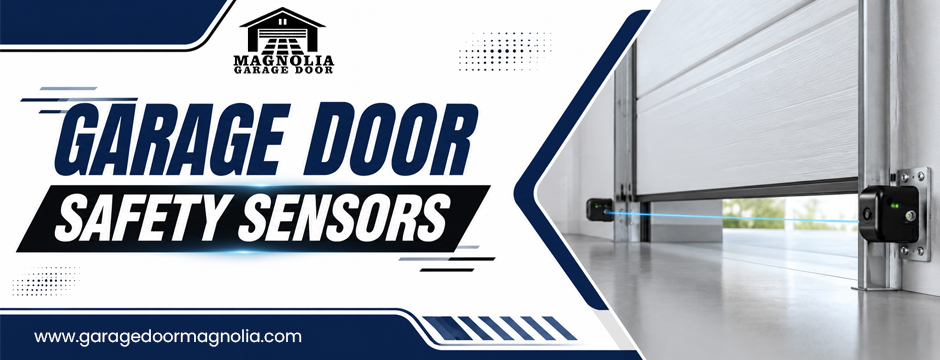
Garage door openers commonly use photoelectric safety sensors positioned near the bottom of the door opening. These sensors communicate across the doorway and are designed to detect an obstruction.
Dirt, misalignment, physical damage, or an interrupted sensor connection can prevent the opener from closing the door.
Look around the sensor area for objects that may be blocking the beam. You can also check whether the sensor units appear properly positioned.
If the sensors appear clean and aligned but the door still refuses to close, the issue may involve the wiring, sensors, control system, or opener.
Do not bypass or disable the safety sensors simply to make the door close. They are an important part of the opener’s safety system.
The Door Reverses Before Reaching the Floor
A door that starts closing but reverses before reaching the ground can have several possible causes.
The safety sensors are one possibility, but the opener’s travel settings can also be involved. These settings determine how far the opener moves the door in each direction.
Resistance from the garage door can also cause reversal. Worn rollers, track problems, damaged hardware, or an improperly balanced door can make movement more difficult.
The opener may interpret excessive resistance as a safety concern and reverse the door.
Rather than repeatedly adjusting settings without identifying the underlying problem, have the complete system inspected. Changing opener settings may temporarily alter the symptom without resolving the mechanical issue.
The Opener Makes Grinding, Clicking, or Humming Sounds
Unusual sounds are useful warning signs.
A humming noise without normal door movement may indicate that the motor is receiving power but cannot move the system as expected. Grinding or clicking sounds can point to worn or damaged internal components.
Noise can also originate from the garage door itself. Rollers, hinges, tracks, springs, and other hardware can produce sounds that may be mistaken for an opener problem.
This is why diagnosing the entire system matters. An opener may be blamed for a noise that is actually coming from a worn door component.
If a new or unusually loud sound appears, stop using the opener repeatedly until the cause is identified.
The Garage Door Opens Slowly or Struggles to Move
A garage door that gradually becomes slower may be showing signs of mechanical resistance or opener wear.
The door’s weight is normally balanced by its spring system. When the door becomes difficult to move, the opener has to work harder to move it.
Worn rollers can create additional friction. Track problems can affect movement. Damaged or poorly adjusted components can also make the system harder to operate.
The opener itself may eventually show signs of strain when it is repeatedly required to overcome resistance.
A technician should inspect both the opener and door hardware rather than replacing the opener immediately. In some cases, addressing the underlying door problem can restore normal operation without replacing the motor unit.
The Opener Works Intermittently
Intermittent problems can be particularly frustrating because the opener may work normally one moment and fail the next.
Possible causes include electrical problems, loose connections, failing controls, sensor issues, remote problems, or components that are beginning to wear out.
Pay attention to when the failure happens. For example, note whether the problem occurs with both the wall control and remote, whether the opener makes a sound, and whether the door begins moving before stopping.
These details can help a technician narrow down the cause.
If the opener becomes increasingly unreliable, do not wait until the door stops working completely. Intermittent operation can be an early indication of a component that needs attention.
The Opener Light Works but the Door Does Not
An illuminated opener does not necessarily mean that the complete system is functioning correctly.
The light may operate even when the motor, drive system, control board, sensors, or other components have a problem.
This is another reason not to diagnose an opener based on a single symptom. If the unit has power but does not respond to commands or move the door, the system needs further testing.
What You Should Check Before Calling for Repair
There are a few basic checks homeowners can make without taking apart the opener.
First, confirm that the opener has power. Check the outlet and circuit if necessary.
Next, test both the wall control and remote. If one works and the other does not, that information can help identify the source of the problem.
Check the remote battery and look around the garage door opening for obvious obstructions.
Inspect the safety sensor area and make sure nothing is blocking the sensors.
You can also observe how the door behaves. Does it remain completely still? Does the motor run? Does the door begin moving and then stop? Does it reverse?
Avoid removing covers, adjusting internal electrical components, or attempting to repair springs and cables yourself. These components can create serious safety risks when handled incorrectly.
When You Need Professional Garage Door Opener Repair
Professional service is appropriate when basic checks do not resolve the problem or when the opener shows signs of a mechanical or electrical fault.
You should also seek help when the garage door is unusually heavy, makes severe noises, comes off its tracks, or has broken springs or cables. These issues can affect the opener and may make continued operation unsafe.
Professional Garage Door Opener Repair Magnolia can include diagnosing opener failures, checking controls and sensors, inspecting drive components, identifying mechanical resistance, and determining whether repair or replacement is appropriate.
A proper diagnosis should consider the opener and the garage door as a complete system. Replacing an opener without addressing a damaged track, worn rollers, broken spring, or other underlying problem may not solve the original issue.
What Garage Door Opener Services Can Include
Garage Door Opener Services Magnolia can cover several types of work depending on the condition of the system. This may include opener troubleshooting, repair, installation, control inspection, sensor-related diagnosis, and evaluation of drive components.
Opener systems can also vary by design. Chain-drive, belt-drive, wall-mount, smart, and Wi-Fi-compatible systems may have different components and operating characteristics. A proper inspection helps identify the specific cause rather than treating every opener problem in the same way.
If an opener is old, repeatedly failing, or no longer suitable for the garage door, replacement may make more sense than continued repairs. The decision should be based on the condition of the equipment, the frequency of failures, repair requirements, and compatibility with the existing door.
How Regular Maintenance Can Prevent Opener Problems
Routine maintenance can help identify problems before they result in a complete failure.
During maintenance, the garage door should be inspected for signs of wear, while rollers, tracks, springs, cables, hinges, and other hardware can be checked for problems. The opener and its controls should also be tested.
A garage door that moves smoothly places less strain on its opener. Keeping the door system in good working condition can therefore help reduce unnecessary stress on the motor and drive mechanism.
Maintenance is particularly useful when the door has started making new noises, moving unevenly, or responding more slowly than usual.
Our Role at Garage Door Magnolia
At Garage Door Magnolia, we provide garage door repair, installation, opener repair and installation, spring repair, maintenance, and other garage door services for homeowners in Seattle and the surrounding areas. Our approach is straightforward: we inspect the problem, explain what is causing it, and recommend the appropriate repair or replacement based on the condition of the system. We handle issues involving openers, springs, rollers, panels, sensors, tracks, and other garage door components, with the goal of getting the door operating safely and reliably. Our service information also includes same-day and emergency availability when scheduling allows.
Conclusion
A garage door opener can stop working for many reasons, from a dead remote battery or blocked safety sensor to worn drive components, electrical faults, or excessive resistance from the garage door itself.
The key is to identify the actual cause instead of repeatedly resetting or forcing the opener to operate. Basic checks can help with simple problems, but mechanical, electrical, spring, cable, and track issues should be handled by a qualified garage door technician.
If your opener is making unusual sounds, operating inconsistently, refusing to close, or failing to move the door, professional inspection can determine whether the system needs a repair, adjustment, maintenance, or replacement.
Frequently Asked Questions
1. Why is my garage door opener not working?
A garage door opener may stop working because of a power issue, dead remote battery, blocked safety sensors, wiring problems, worn drive components, or a motor or control-system fault. The symptoms can help identify the likely cause.
2. Why does my garage door opener run but the door does not move?
If you can hear the opener motor running but the door does not move, there may be a problem with the drive mechanism, trolley, chain, belt, or another component connecting the opener to the door. The garage door itself may also have a mechanical problem.
3. Why does my garage door open but not close?
A blocked or misaligned safety sensor is a common reason a garage door opens but refuses to close. Damaged sensors, wiring problems, or opener control issues can also cause this behavior. Check for obstructions around the sensors before arranging professional service.
4. When should I call for Garage Door Opener Repair Magnolia?
You should consider professional repair when the opener repeatedly fails, makes unusual sounds, operates inconsistently, reverses unexpectedly, or cannot move the door. Professional inspection is also recommended when the problem may involve springs, cables, tracks, or other garage door hardware.
5. Can a garage door opener be repaired instead of replaced?
In many cases, an opener can be repaired if the problem involves a serviceable component or adjustment. Replacement may be more appropriate when the opener is severely worn, repeatedly fails, or is no longer suitable for the door. A technician can assess the system and explain the available options.