


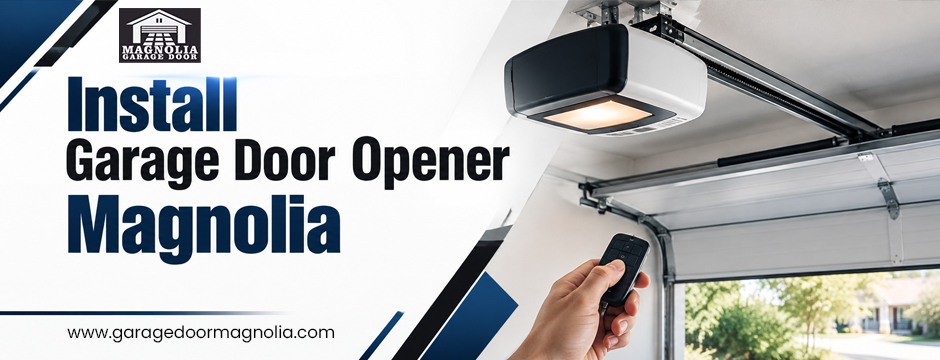
A garage door opener is more than a motor that lifts and lowers the door. It is a mechanical and electrical system that must work with the door’s weight, spring system, tracks, rollers, safety sensors, and control equipment. When installation is done correctly, the opener operates within its intended load range, the door travels smoothly, and the safety systems respond as designed.
When homeowners search for Install Garage Door Opener Magnolia, they are often dealing with a new garage door, an aging opener, repeated opener problems, or a need for improved access and security. The right installation starts with evaluating the entire door system rather than simply mounting a new motor to the ceiling.
This guide explains what a professional garage door opener installation should include, which factors determine the right opener, and why installation quality affects safety, performance, and service life.
What Does a Garage Door Opener Actually Do?
A garage door opener provides powered movement for a sectional or other compatible garage door. Depending on the system, the opener uses a motor connected to a drive mechanism such as a chain, belt, or screw drive. The drive moves a trolley along a rail, which transfers force to the garage door through an arm assembly.
The opener does not independently support the full weight of a properly balanced garage door. The spring system counterbalances the door, while the opener provides the controlled force needed to move it.
This distinction matters.
If the door is excessively heavy, binding in the tracks, or incorrectly balanced, installing a stronger opener does not necessarily solve the underlying problem. The door itself may require repair or adjustment before a new opener can be installed.
A proper installation therefore begins with the door, not the opener.
Step 1: Inspect the Existing Garage Door System
Before selecting or installing an opener, the technician should inspect the condition of the complete door assembly.
Important components include:
- Garage door panels
- Torsion or extension springs
- Lift cables
- Rollers
- Tracks
- Hinges
- Brackets
- Drums
- Bearings
- Existing opener hardware
- Safety sensors
The technician should also operate the door manually when appropriate to determine whether it moves smoothly and remains reasonably balanced.
A garage door that requires excessive force to lift, binds at a particular point, or drops rapidly can indicate a mechanical problem. Installing an opener without addressing that problem can place unnecessary stress on the new equipment.
Choosing the Correct Garage Door Opener
Garage door openers are available in several configurations. The correct choice depends on the door, garage layout, usage requirements, and homeowner preferences.
Chain-Drive Openers
Chain-drive systems use a metal chain to move the trolley along the rail. They are widely used because of their proven mechanical design and ability to handle many residential applications.
Their primary drawback is operating noise. A chain drive may not be ideal when the garage is located directly beneath a bedroom or living area.
Belt-Drive Openers
Belt-drive openers use a reinforced belt instead of a metal chain. They generally provide quieter and smoother operation, making them particularly useful for attached garages where operating noise is noticeable inside the home.
The appropriate belt-drive model still needs to be matched to the door and installation requirements.
Screw-Drive Openers
Screw-drive systems move the trolley using a threaded steel rod. Their design has fewer moving components than some other drive configurations, although suitability depends on the specific opener, garage conditions, and manufacturer requirements.
Wall-Mount Openers
Wall-mounted, or jackshaft-style, openers are installed beside the garage door rather than on the ceiling. They can be useful when ceiling space is limited or when homeowners want to keep the ceiling clear for storage or other equipment.
They require compatible door hardware and adequate side clearance, so they are not suitable for every garage.
Opener Horsepower Is Not the Only Consideration
Garage door opener ratings can make horsepower appear like the primary selection factor. In practice, the door’s construction, size, balance, operating frequency, and opener design all matter.
A properly balanced residential garage door may not require a high-powered commercial-style motor simply because the door is large. Conversely, a heavily insulated or oversized door may require an opener specifically rated for its dimensions and weight.
The technician should verify the opener’s specifications against the actual door rather than selecting a unit based solely on horsepower.
Using an appropriately rated opener helps prevent unnecessary strain and supports consistent operation.
Step 2: Verify the Door Is Properly Balanced
Balance is one of the most important considerations before opener installation.
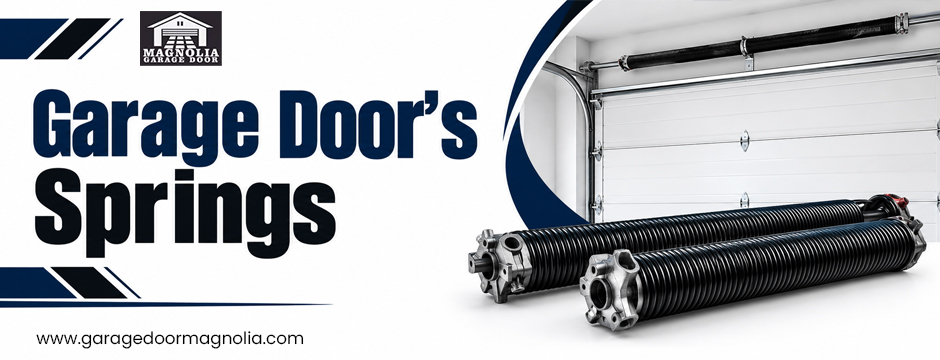
The garage door’s springs counterbalance much of its weight. When the system is correctly adjusted, the door should be relatively manageable during manual operation and should not slam downward or rise uncontrollably.
An opener should not be expected to compensate for a faulty spring system.
If the door is difficult to move manually, professional service may be required before the opener can be installed. Spring adjustment and replacement can involve significant stored energy, so these components should not be handled casually by an untrained homeowner.
Step 3: Install the Opener Rail and Motor Correctly
Once the door system has been verified, the opener can be mounted according to the manufacturer’s specifications.
The installation typically includes:
- Positioning the opener in relation to the centerline of the garage door
- Securing the rail or drive assembly
- Installing the motor unit or wall-mounted mechanism
- Attaching the trolley and door arm
- Installing appropriate mounting brackets
- Connecting the opener to the electrical supply
- Installing and aligning safety sensors
- Programming travel limits and force settings
- Testing remote controls and wall controls
The mounting structure must be capable of supporting the opener and resisting the forces generated during operation.
One common installation mistake is attaching hardware to unsuitable material or relying on inadequate support. The opener should be secured to structural framing or an appropriate engineered support system rather than simply fastened to a weak ceiling surface.
Step 4: Set the Door Travel Limits
Modern garage door openers use travel settings to determine how far the door should open and close.
These settings must be adjusted accurately.
If the close limit is set incorrectly, the door may stop too high, close too far, or place unnecessary pressure on the floor and door assembly. If the open limit is incorrect, the door may fail to open completely or travel farther than intended.
Proper adjustment requires testing the actual door movement after installation rather than relying only on default settings.
Step 5: Adjust Force and Operating Parameters
Garage door openers use force controls and other operating parameters to manage door movement. These settings should be configured according to the manufacturer’s requirements and the actual characteristics of the door.
Too much force can create an unsafe operating condition. Too little force can cause the opener to struggle, stop prematurely, or reverse unnecessarily.
The goal is not to maximize motor force. The goal is controlled movement within the opener’s intended operating parameters.
Step 6: Install and Align the Safety Sensors
Safety sensors are a critical part of a modern garage door opener system.
Typically positioned near the bottom of the garage door tracks, the sensors create an invisible beam across the opening. If that beam is interrupted while the door is closing, the opener should respond according to its safety design.
Correct installation requires:
- Proper sensor positioning
- Secure mounting
- Accurate alignment
- Clear line of sight
- Correct wiring
- Functional testing
Even a small misalignment can prevent the system from operating normally. Dirt, loose brackets, damaged wiring, or physical obstruction can also interfere with sensor operation.
After installation, the technician should test the sensors rather than assuming they are functioning simply because the opener powers on.
Step 7: Program the Controls and Connectivity
A new garage door opener may include several control options.
Depending on the model, these can include:
- Interior wall controls
- Remote transmitters
- Wireless keypads
- Vehicle-integrated controls
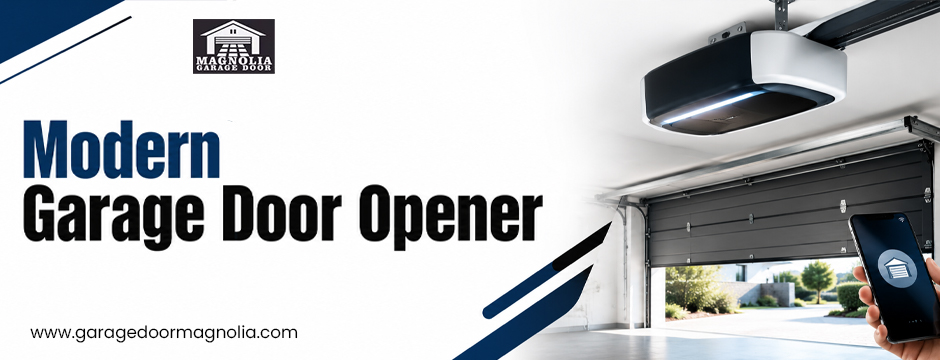
- Smartphone connectivity
- Wi-Fi-enabled operation
Programming should be completed after the mechanical installation and safety testing.
If the opener includes app-based features, the homeowner should also understand how remote access works, how users are added or removed, and what happens if the home’s internet connection changes.
Step 8: Test the Entire System
A garage door opener installation is not complete when the motor starts running.
The entire system should be tested through multiple operating cycles.
The technician should check:
- Opening and closing speed
- Door travel
- Smoothness of movement
- Noise and vibration
- Travel limits
- Force response
- Safety sensor operation
- Wall control operation
- Remote control operation
- Manual release function
- Door balance
- Attachment points
- Electrical connections
The opener should operate without excessive vibration, unusual noise, binding, or inconsistent movement.
Testing several cycles can also reveal problems that are not obvious during a single opening and closing operation.
Why Professional Installation Matters
A garage door is a large moving structure. The opener, springs, cables, tracks, rollers, and brackets all work together. An installation error in one area can affect the performance of the entire system.
Professional installation helps ensure that the opener is compatible with the door and correctly integrated into the existing hardware.
It can also identify mechanical issues before they place additional stress on the new opener.
This is particularly important when replacing an old opener. A homeowner may assume the motor is the only failed component, but excessive noise, inconsistent movement, or repeated opener failure can sometimes originate from worn rollers, damaged tracks, poor balance, or other mechanical issues.
Replacing the opener without correcting those conditions can result in another service problem later.
When Should You Replace an Existing Garage Door Opener?
Not every malfunction requires complete replacement.
Depending on the problem, a technician may be able to repair:
- Worn drive components
- Damaged wiring
- Faulty wall controls
- Misaligned safety sensors
- Certain electrical issues
- Remote-control problems
- Mounting problems
Replacement becomes more practical when the opener is significantly outdated, repeatedly fails, lacks important safety features, has serious mechanical or electrical damage, or no longer meets the needs of the garage.
The condition of the door itself should also be considered before investing in a new opener.
Common Garage Door Opener Installation Mistakes
Several installation problems can reduce reliability or create safety concerns.
Installing an Incompatible Opener
The opener must be rated for the specific door configuration. Choosing a unit without considering door dimensions, weight, construction, and usage can result in poor performance.
Ignoring Door Balance
An opener should not be used to compensate for a door with spring or mechanical problems.
Poor Mounting
An improperly supported opener can vibrate excessively and may eventually loosen its mounting hardware.
Incorrect Travel Settings
Improper limits can prevent the door from opening or closing correctly.
Misaligned Sensors
The opener may refuse to close or may behave unpredictably when the safety sensors are not correctly positioned.
Skipping the Final Safety Test
Powering on the opener is not the same as verifying the complete system. Every relevant safety and control function should be tested before the installation is considered finished.
How Proper Installation Can Extend Opener Life
The lifespan of an opener depends on more than the motor itself.
When the door is balanced, tracks are properly aligned, rollers move smoothly, and the opener is correctly adjusted, the system can operate without unnecessary resistance.
That reduces avoidable strain on the drive mechanism and motor.
Regular maintenance also matters. Periodic inspection can identify worn rollers, loose hardware, deteriorating cables, track problems, or other issues before they place additional demands on the opener.
Homeowners should follow the manufacturer’s maintenance recommendations and arrange professional inspection when the door develops unusual operating behavior.
What Homeowners Should Expect From an Installation Service
A professional garage door opener installation should involve more than removing an old motor and attaching a replacement.
A complete service should address:
- Door and hardware inspection
- Opener compatibility
- Mounting requirements
- Rail or drive installation
- Door-arm connection
- Safety sensor installation
- Travel-limit adjustment
- Force configuration
- Control programming
- Manual release operation
- Full operational testing
- Homeowner instructions
The homeowner should understand how to operate the new opener, use the emergency release, recognize basic warning signs, and contact a professional when a mechanical problem develops.
Magnolia Garage Door for Professional Opener Installation
At Magnolia Garage Door, we approach opener installation as part of the complete garage door system. We inspect the door, springs, rollers, tracks, cables, mounting points, and related hardware before installing an opener. Our goal is to ensure that the selected equipment is appropriate for the door and that the installation is completed with proper alignment, secure mounting, correctly positioned safety sensors, and accurate operating adjustments.
We also test the system after installation rather than treating the job as complete once the opener powers on. If we identify a mechanical issue that could affect the opener’s performance, we explain the problem and discuss the appropriate repair before proceeding. Our service covers both new opener installations and replacement of existing units when repair is no longer the practical option.
Conclusion
A garage door opener installation is a system-level job, not simply a motor replacement. The opener must work correctly with the door, spring system, tracks, rollers, cables, controls, and safety equipment.
For homeowners considering Install Garage Door Opener Magnolia, the quality of the installation matters just as much as the equipment selected. Proper inspection, compatible equipment, secure mounting, accurate travel and force settings, correctly aligned safety sensors, and thorough testing all contribute to dependable operation.
A professionally installed opener can provide smooth and convenient access while reducing avoidable strain on the garage door system. When the installation is approached correctly from the beginning, homeowners can have greater confidence that the opener and door are working together as intended.
Frequently Asked Questions
1. How do you choose the right garage door opener?
The right opener depends on your door’s size, weight, balance, usage, and garage layout. A professional can assess these factors and recommend a compatible model.
2. Can you install an opener if your garage door is difficult to open?
Your door should be inspected first. Difficulty opening it may indicate worn springs, rollers, cables, or tracks that need attention before installing a new opener.
3. What does professional opener installation include?
It typically includes door inspection, secure opener mounting, rail and arm installation, safety sensor alignment, travel and force adjustments, control programming, and final testing.
4. How long should a garage door opener last?
Service life depends on usage, maintenance, opener quality, and the condition of your garage door. Regular maintenance can help reduce unnecessary wear.
5. Should you repair or replace your garage door opener?
Minor sensor, wiring, or control problems may be repairable. Replacement may be appropriate when the opener is outdated, repeatedly failing, or seriously damaged.